

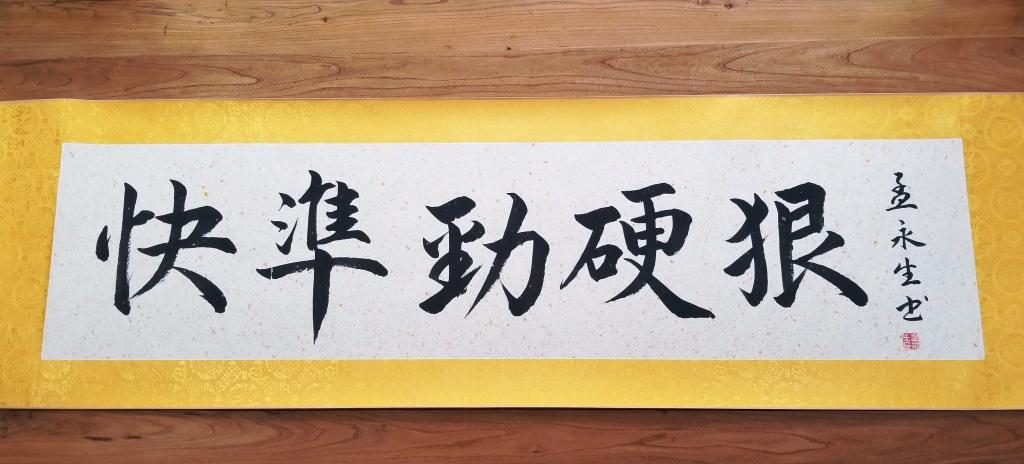
Calligraphy(书法 Shūfǎ) is now considered an art form, but perhaps you didn’t know that traditionally it was much more – a way to cultivate personal character. It was considered essential for any cultured person to be skilled in calligraphy (as well as the related skill, painting).

The earliest form of Chinese script is Oracle Bone script, found carved into bone and shell mainly at historical sites near Anyang in Henan. The earliest texts written in Oracle Bone Script record the divinations of Wu Ding, who was king of the Shang Dynasty in 1250 BCE. However, because the script on the oracle bones was already well-developed it must have been in use well before that date and just has not survived in the archaeological record.
In addition, since it was difficult to carve curves into bone, the script was simplified, so it is likely not a good representation of the characters actually in use at the time. There is also plenty of evidence that brushes and ink, the two most important tools of calligraphy, were already in use. Bamboo ‘pages’ were commonly used for writing on, and so Chinese developed as a vertical script.

Over the hundreds of years of Imperial China there were many reforms to Chinese characters and several main styles were established. Since few paper documents survive, much of what we know about calligraphy before the Ming dynasty comes from stele, which were stone tablets carved with calligraphy written by scholars, officials and emperors.
In the later Tang Dynasty printing began, which stabilized the development of characters and five main styles emerged: (From most formal to least formal) Seal Script, Clerical Script, Regular Script, Semi-cursive Script (similar to normal handwriting) and Cursive Script. These are still written in much the same way today.

Calligraphers use the ‘Four Treasures of the Study’: the brush, usually made of animal hair, the ink, made of soot mixed with glue, paper (or sometimes silk) and an inkstone, which the dry ink was ground on and mixed with water. Whole industries and cultures have grown up around each ‘treasure’, and ink sticks, ink stones and brushes are often prized works of art in themselves.

When beginning calligraphy, students copy their teacher until they can replicate their calligraphy, writing the same character thousands of times until it is perfect. The amount of ink on the brush, the angle of the brush, the pressure applied and the type of paper used all affect the final character. The character 永 is often used for beginners as it includes all 8 major strokes found in Chinese characters.
One of the easiest ways to appreciate calligraphy is to go to your nearest park! There you’ll probably find older people practicing water calligraphy (or, as it is known in Chinese, ground calligraphy; 地书 Dì shū).

Learning calligraphy takes time and patience, but the rewards are many – not only does it teach culture, patience and control, but the focus required means it’s also a kind of meditation for many calligraphers!
The Cultural Treasures of China blog is dedicated to introducing the cultural heritage of China. Be sure to check back often for our latest posts and learn about all the most interesting and exciting aspects of Chinese culture! If you would like us to write about a particular topic you’re interested in, or had any questions about the article, please feel to contact us at info@culturalkeys.cn. We’d love to hear from you!
Let us know in the comments below. Have a question about anything Cultural Keys related? Use the contact form at the bottom of the page. However you choose to get in contact, we always love hearing from you!
Photo Credits
– Cultural Keys
Contact Us
Stay up-to-date with the latest offers, information and events from Cultural Keys. Follow our Official WeChat Account by scanning the QR code (click for larger image), or follow us on Facebook, Instagram or LinkedIn to be the first to know!
For more information about anything on this page, or for more information about Cultural Keys, please contact us or use the form below to let us know your specific requirements.
Recent Posts




Mouseover to see left and right arrows
Upcoming Events

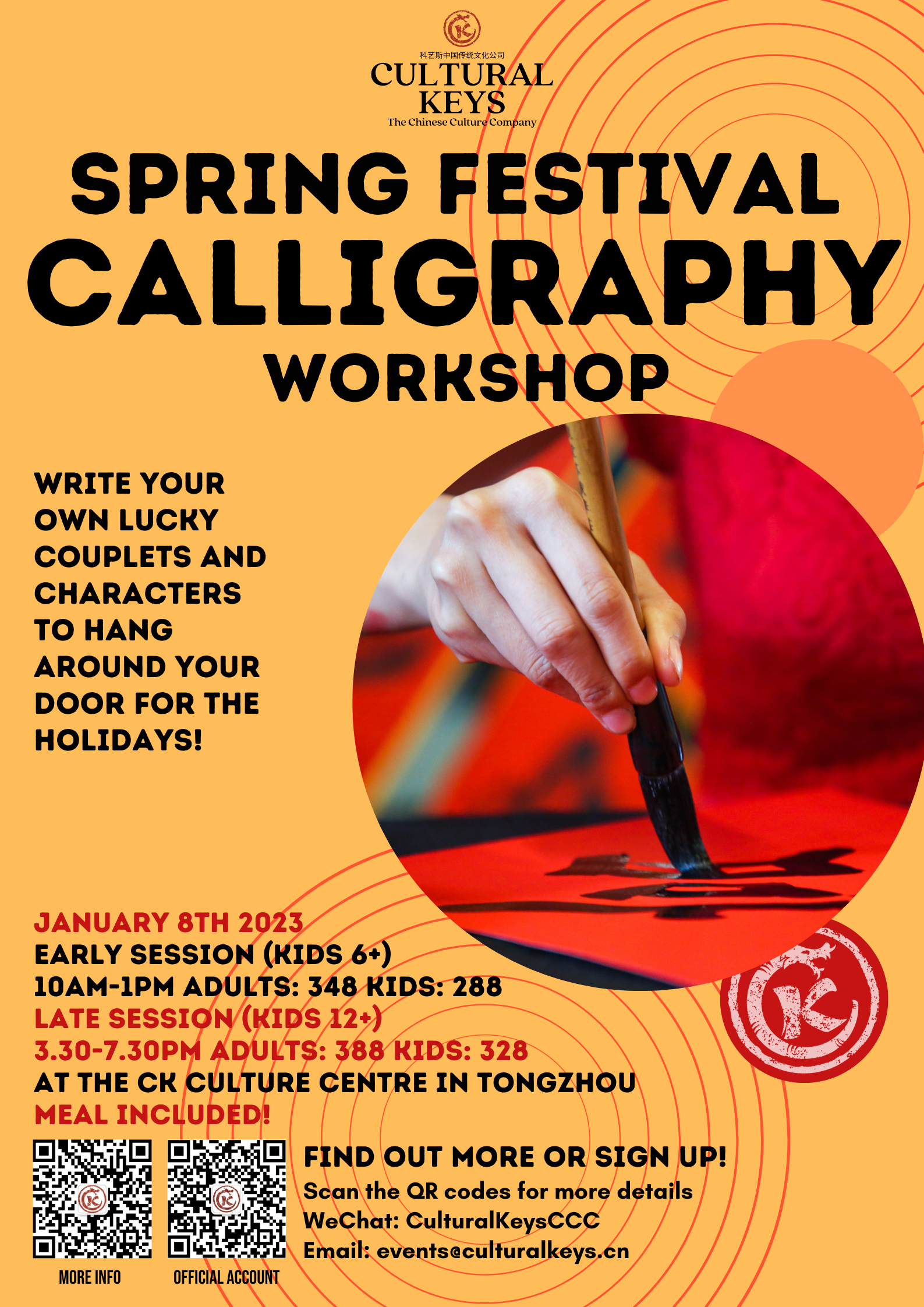
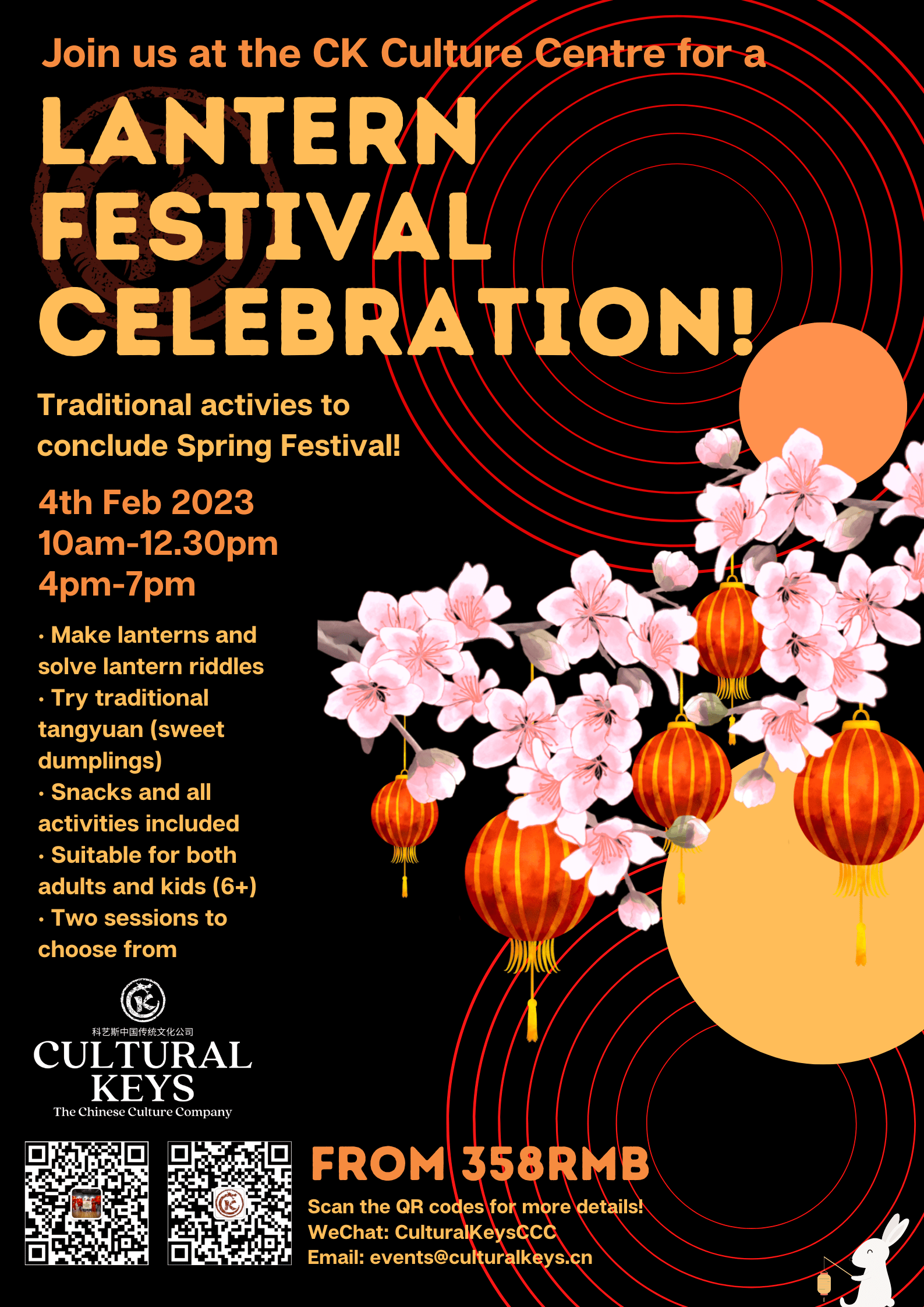
Mouse-over to see left and right arrows
About Cultural Keys Chinese Culture Company
Cultural Keys helps you access, understand and enjoy life in China through traditional Chinese culture. Click here to read more about Cultural Keys and what we can do for you, your school, company or group to help you get more out of your time in China!